
CURRENT LEGAL ARTICLES
Succession - Conveyancing - Medical Negligence - Personal Injury - Solicitors
Drink Driving and Employment in Ireland
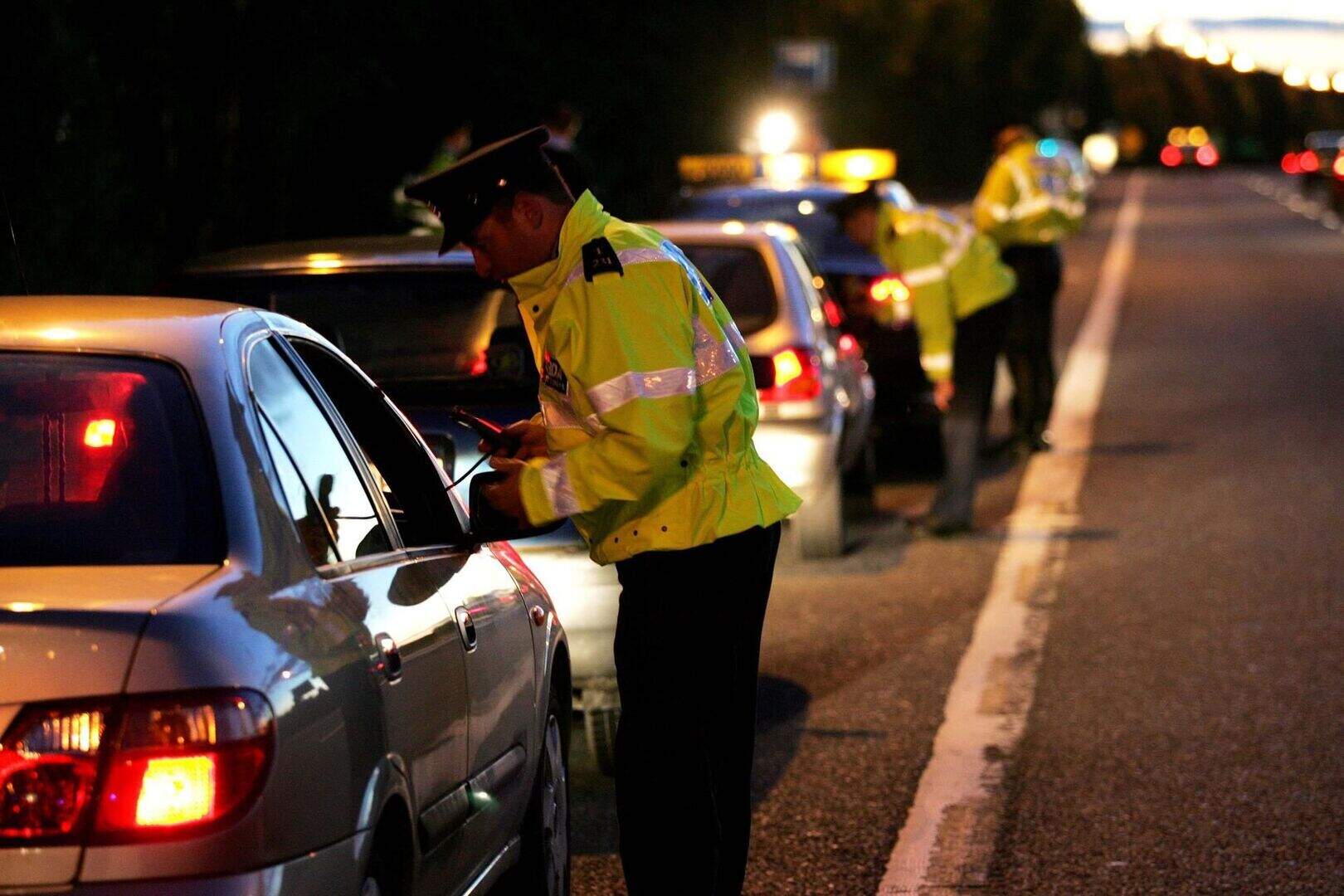
Drink Driving and Employment in Ireland
The questions that actually decide the outcome
A drink driving charge is rarely experienced as a road traffic problem. Within a day or two of the charge sheet, most people are no longer thinking about the fine. They are thinking about whether they will still have a job in three months, and whether they are obliged to tell anyone yet.
Employers arrive at the same event from the opposite direction, and usually later — often after the conviction, sometimes after the employee has already stopped driving. By then the decisions that determine whether a dismissal survives scrutiny have frequently already been made badly.
This note sets out how the two areas of law interact, and where in practice the outcome is decided.
The road traffic position, stated plainly
For most fully licensed drivers the limit is 50mg of alcohol per 100ml of blood, 67mg per 100ml of urine, or 22 micrograms per 100ml of breath. A lower limit of 20mg blood, 27mg urine and 9 micrograms breath applies to specified persons — a category broader than learner drivers, extending to bus, truck and taxi drivers and to anyone driving without a licence for the category in question. Novice drivers, within two years of passing the test, are held to the lower limit.
One correction is necessary at the outset, because it is still commonly repeated and it materially misleads people about their employment exposure: there is no penalty points outcome.
The drink driving provisions of the Road Traffic (Amendment) Act 2018, commenced on 26 October 2018, ensure that all drink drivers without exception receive a disqualification, removing the earlier concession by which some received penalty points instead.
The administrative route survives, but it is a route to a shorter ban rather than to no ban. A fixed charge notice attracts €200 and three months up to 80mg, or €400 and six months between 80mg and 100mg. Payment avoids prosecution, but the disqualification applies automatically, without any court order and with no discretion. It is available only where the reading does not exceed 100mg, the driver is not already disqualified, and the option has not been used in the preceding three years.
In court, the minimum disqualification runs from six months at the lowest band to three years above 150mg, and those are minimums a judge may exceed. Refusal or failure to provide a specimen carries a fine of up to €5,000 and up to six months’ imprisonment, with a minimum four-year disqualification for a first offence.
The employment consequence follows from this and should be planned around it: assume time off the road.
Advice premised on avoiding a ban is, in the overwhelming majority of cases, advice premised on a state of the law that ceased to exist in 2018.
The first question is capability or conduct, and it is not a formality
Almost every subsequent question turns on whether driving is an essential requirement of the role.
Where driving is essential
Where it is — delivery, haulage, passenger transport, SPSV work, field sales across a territory — a disqualification engages capability. The employee cannot lawfully perform the core function, and no view need be taken about the morality of the conduct. The employer’s obligations shift accordingly: the enquiry becomes whether the incapacity is permanent or temporary, whether it can be accommodated, and whether the role can be performed differently for its duration.
Where driving is incidental or absent
Where driving is incidental or absent, the matter is one of conduct, and the employer must establish a genuine connection between private behaviour and the employment relationship. Irish law has never permitted dismissal on the basis of disapproval alone. Where off-duty conduct has founded a fair dismissal — Flynn v Power [1985] IR 648 being the familiar example — it has been because the conduct was demonstrably incompatible with the particular employment, not because it was embarrassing.
Employers who conflate the two categories tend to lose. A capability process dressed up as gross misconduct invites the finding that the employer had decided the outcome in advance.
What a dismissal must survive
Three features of the Unfair Dismissals Acts 1977–2015 shape every case in this area.
Service determines whether there is a case at all
Twelve months’ continuous service is generally required. Below that threshold the statutory remedy is unavailable, and the employee’s recourse, if any, lies in a wrongful dismissal claim for breach of the contractual notice or disciplinary provisions. This should be established before anything else is discussed, on either side.
The burden rests on the employer
A dismissal is deemed unfair unless the employer proves it resulted wholly or mainly from a permitted ground — conduct, capability, redundancy, contravention of a statutory requirement, or other substantial grounds. The existence of a conviction does not discharge that burden; it is a fact the employer must then show justified the sanction imposed.
The test is the reasonableness of the employer
The test is the reasonableness of the employer, not the correctness of the outcome. The tribunal does not substitute its own view of what it would have done (Looney & Co Ltd v Looney, UD843/1984), but asks whether the decision fell within the range of responses reasonably open to an employer in those circumstances — the approach confirmed by Noonan J in Bank of Ireland v Reilly [2015] IEHC 241. That formulation protects employers who decide reasonably and destroys those who decide hastily.
Fair procedure is where most cases are actually determined
The requirements are unglamorous and were set out clearly by Flood J in Frizelle v New Ross Credit Union Ltd [1997] IEHC 137: a genuine complaint, a fair investigation, the allegations put to the employee, the employee’s answer actually considered, and a sanction proportionate to what was found. A dismissal can fail on any one of these while the underlying conviction stands entirely undisputed.
Claims are ordinarily brought to the Workplace Relations Commission within six months of dismissal, extendable to twelve only on reasonable cause shown.
For employers
Have the policy before the incident
A policy on driving offences, company vehicle use, licence verification and disclosure obligations is worth considerably more when it predates the event than when it is drafted in response to one. Communicate it, and be able to prove it was communicated.
Establish the capability question
Establish the capability question in writing before the process begins. The answer dictates which process you run, and running the wrong one is difficult to repair later.
Consider alternatives
Consider alternatives, and record that you did — temporary redeployment, altered duties, a colleague driving, a period of unpaid leave, or a return to the role on restoration of the licence. Adjudicators consistently ask what was considered. “Nothing” is not a survivable answer where the disqualification is measured in months and the employee has years of service.
Do not short-circuit the process
Do not allow the conviction to short-circuit the process. The clearer the facts appear, the more tempting it is to compress the procedure, and the more likely the dismissal is to be overturned on procedure alone.
For employees
Read the contract before you say anything
Disclosure obligations are contractual in the first instance. If one exists and you do not comply, the non-disclosure frequently becomes the more serious allegation — and a much easier one for an employer to prove.
Consider the connection to your employment
Do not assume that an offence at the weekend is a private matter. Where you drive for work, hold a company vehicle, or are named on company insurance, the link to the employment is closer than it feels.
Participate in the process
Participate in the process, in writing where possible. Procedural defects are your strongest ground, but they are worth far more identified during the process than complained of afterwards.
Do not resign
Resignation in anticipation of dismissal forfeits most of the protection you would otherwise have, and constructive dismissal is a substantially harder case to run.
Vehicles, insurance and the employer’s own exposure
A disqualified employee cannot lawfully drive the company vehicle, irrespective of what the employer is willing to permit. Driving while disqualified is a distinct and serious offence, and an employer who acquiesces has created a problem of its own rather than solved the employee’s.
Company motor policies commonly require disclosure of convictions of authorised drivers. This is a question for the broker, in writing, and not one to be resolved by assumption.
Employers also owe duties under the Safety, Health and Welfare at Work Act 2005 in respect of employees driving in the course of work. Periodic licence verification is part of discharging them, and its absence is conspicuous when something goes wrong.
Disclosure over the longer term
The Criminal Justice (Spent Convictions and Certain Disclosures) Act 2016 provides that District Court convictions for motoring offences more than seven years old are regarded as spent, with spent convictions for dangerous driving limited to a single conviction. Road Traffic Acts convictions in the District Court are also exempt from the general restriction limiting a person to one spent conviction.
The qualifications matter.
Certain categories of work, licensing applications and insurance proposals fall outside the regime, and the Act governs disclosure rather than erasing the conviction. It is not a general amnesty and should not be relied upon without advice.
On timing
Both sides tend to seek advice at the point the consequences have crystallised. The useful moments are earlier and are easy to identify.
For an employee
It is when the charge is brought — while the disclosure position, the likely disqualification period and the contractual exposure can still be managed together rather than sequentially.
For an employer
It is when the policy is written, or at the latest when the matter first comes to notice. By the time a decision has issued, the procedural record is fixed, and it is the record rather than the merits that will be examined.
Concerned About Drink Driving and Employment?
If you are facing a drink driving charge, potential disqualification or employment consequences, early legal advice can help you understand your position and the issues that may arise.
Book a Standard ConsultationFrequently Asked Questions
Can I be dismissed for a drink driving conviction that happened outside work?
Will I definitely be disqualified?
Do I have to tell my employer about the charge?
What happens if I am disqualified and my job requires driving?
Can my employer dismiss me immediately after a conviction?
How long do I have to bring a claim?
Does a first offence differ from a repeat offence?
What if I drive a company vehicle and I am disqualified?
About Green & Associates Solicitors
Green & Associates Solicitors advises clients across Cork and Ireland in relation to employment law, criminal defence and road traffic matters.
Where a drink driving charge may affect your employment, professional responsibilities, company vehicle use or contractual obligations, obtaining specialist legal advice at an early stage can be important.
To discuss your situation with a solicitor, book a consultation online:
Standard Consultation (45–60 minutes)Contact Green & Associates Solicitors
Waterfront Square
Cork, T23 PPT8