
CURRENT LEGAL ARTICLES
Succession - Conveyancing - Medical Negligence - Personal Injury - Solicitors
Road Traffic Accidents: When It Is a Personal Injury Case, a Criminal Case, or Both
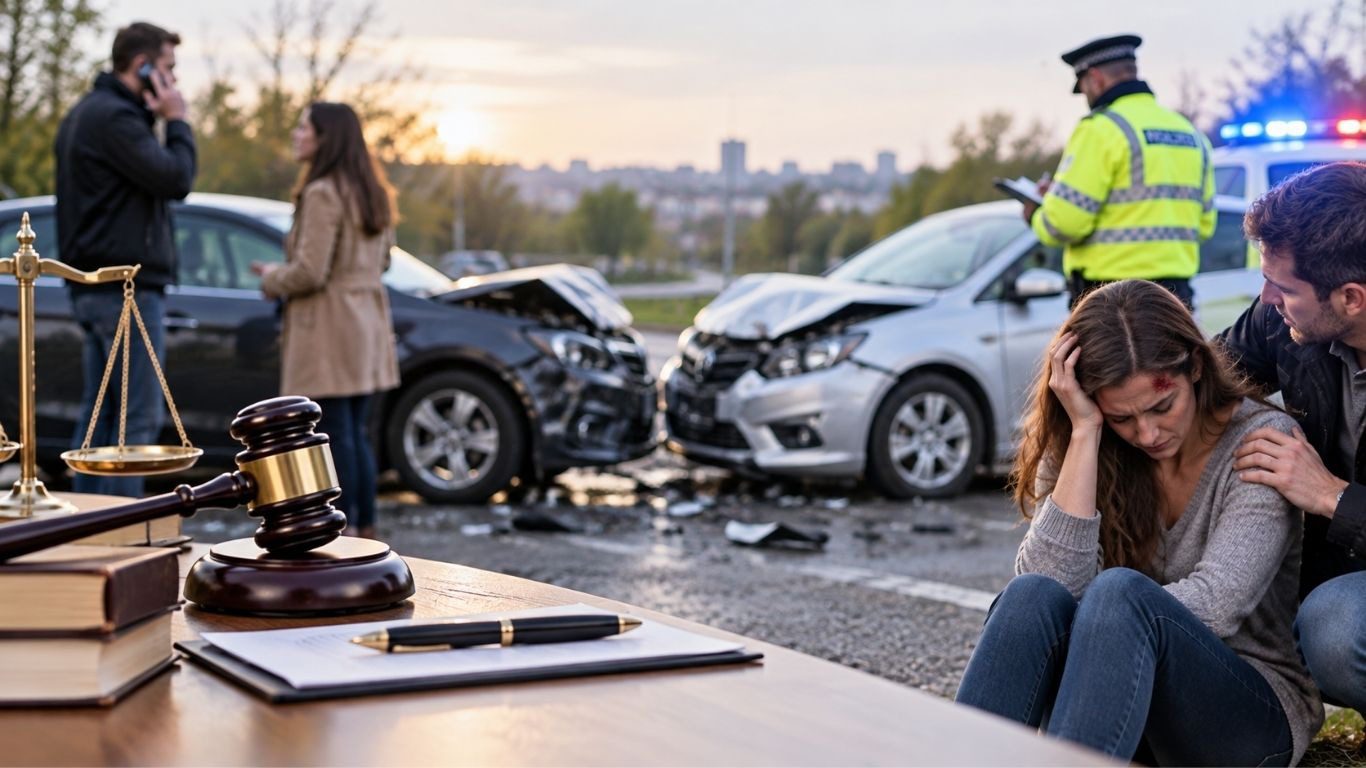
Road Traffic Accidents: When It Is a Personal Injury Case, a Criminal Case, or Both
Understanding the difference between personal injury claims and criminal road traffic prosecutions, when both can arise from the same accident, and how the two processes can interact.
Introduction
After a road traffic accident, people are often unsure which process actually applies to their situation. Is this a personal injury case, handled through the Injuries Resolution Board and, if necessary, the civil courts? Is it a criminal matter, with the other driver facing prosecution for a road traffic offence? Or is it both, running at the same time, and if so, how do the two actually interact?
This confusion is understandable, because the two processes are genuinely separate, governed by different rules, different standards of proof, and often different timelines, yet they frequently arise from the exact same accident. This guide explains how each process works, when both apply, and how one can affect the other.
Get in touch or call 021 470 8570.
The Two Separate Tracks, Explained
The Criminal Case
The criminal case is a prosecution brought by the State, usually through An Garda Siochana and the Director of Public Prosecutions, against a driver believed to have committed a road traffic offence, such as dangerous driving, drink driving, or drug driving.
Its purpose is to punish the offence itself: fines, penalty points, disqualification, or in more serious cases, a custodial sentence. It does not, on its own, compensate anyone who was injured.
The Personal Injury Case
The personal injury case is a separate civil claim brought by the injured party, generally against the at-fault driver or their insurer, seeking compensation for the injury and losses suffered.
It is not brought by the State, and its outcome has no bearing on whether the other driver faces criminal penalties.
One Accident Can Create Both Cases
A single accident can, and very often does, give rise to both at the same time, run by different parties, in different forums, for entirely different purposes.
Key Differences Between the Two Processes
| Factor | Criminal Case | Personal Injury Case |
|---|---|---|
| Who brings it | The State (via Gardai and DPP) | The injured person |
| Purpose | Punish the offence | Compensate the injured person |
| Standard of proof | Beyond reasonable doubt | Balance of probabilities |
| Possible outcome | Fine, penalty points, disqualification, or imprisonment | Compensation payment |
| Where it starts | District Court (most road traffic offences) | Injuries Resolution Board, then civil courts if required |
| Time limit | Set by the specific offence and prosecution rules | Generally two years from the date of the accident, or date of knowledge if later |
When Only a Criminal Case Applies
This is less common than people assume, but it happens where a road traffic offence occurred without anyone being injured. Examples include:
Speeding or Dangerous Driving
A driver may be caught speeding or driving dangerously without any collision or injury occurring.
Drink or Drug Driving
A drink or drug driving offence may be detected at a checkpoint where no accident has occurred.
Insurance or Licence Offences
Driving without insurance or a valid licence can result in prosecution even where there has been no collision.
In these cases, there is a prosecution but no personal injury claim, since no injury has occurred.
When Only a Personal Injury Case Applies
This arises where an accident causes injury, but no criminal offence is being prosecuted, either because no offence occurred or because a decision was made not to prosecute.
For example, a genuine accident may involve driving fault without that conduct reaching the threshold of a criminal road traffic offence.
When Both Apply Together
This is the situation that causes the most confusion, and it is common in more serious accidents. Examples include:
Dangerous Driving Causing Injury
A driver is charged with dangerous driving causing injury, while the injured party separately pursues a personal injury claim against that driver.
Drink Driving Accident
A drunk driving conviction follows an accident, and the injured party brings a civil claim against the same driver, or their insurer, for compensation.
Hit-and-Run
A hit-and-run is prosecuted as a criminal matter while the injured party separately pursues compensation, potentially through the Motor Insurers Bureau of Ireland where the driver cannot be identified or was uninsured.
Separate, But Not Entirely Disconnected
In these situations, the two cases proceed independently, often on different timelines, but they are not entirely disconnected from one another.
How a Criminal Conviction Can Affect a Personal Injury Claim
A criminal conviction arising from the same accident can be significant evidence in the related personal injury claim.
It Can Help Establish Liability
A conviction for dangerous driving or drink driving arising from the accident can be relied upon as strong evidence of fault in the civil claim, since the criminal standard of proof (beyond reasonable doubt) is higher than the civil standard (balance of probabilities).
If fault has already been proven to the higher standard, establishing it to the lower civil standard is generally more straightforward.
It Does Not Guarantee Compensation
A conviction addresses fault, not the extent of the injury or the value of the claim, which still needs to be properly evidenced and assessed separately.
It Does Not Determine the Civil Case
The personal injury claim is still assessed on its own evidence and its own process, including any applicable Injuries Resolution Board assessment.
Does the Personal Injury Case Have to Wait for the Criminal Case?
Not necessarily, though timing is often coordinated in practice. The two processes can, and often do, run in parallel.
In some cases, it makes practical sense to allow the criminal case to conclude first, particularly where its outcome, such as a conviction, would meaningfully strengthen the evidence available for the civil claim. In others, the personal injury claim proceeds independently, particularly given the strict two-year time limit that applies regardless of what is happening in the criminal case.
What This Means in Practice
If You Were Injured
If you have been injured in an accident where the other driver may face a road traffic charge, treat the personal injury claim as a separate matter requiring its own timeline and its own evidence, rather than something that will simply follow on from the criminal case.
If You Are Facing a Prosecution
If you are a driver facing a road traffic prosecution arising from an accident where someone was injured, understand that the criminal case and any personal injury claim against you are separate processes, often involving separate legal considerations, including how any admissions made in one process could be relevant to the other.
In Both Situations
Early advice on how the two processes interact, and how to manage the timeline of each, materially affects the outcome of both.
Dealing With Both a Criminal and Personal Injury Process?
If you are dealing with the aftermath of a road traffic accident, getting advice early can help you understand which process applies and how the two processes may interact.
Contact Green & Associates SolicitorsFrequently Asked Questions
Can I claim compensation even if the other driver is not prosecuted?
Yes. A personal injury claim can proceed on the civil standard of proof (balance of probabilities), independent of whether a criminal prosecution is brought or succeeds.
If the other driver is convicted, does that mean I will automatically win my personal injury claim?
A conviction is strong evidence of fault, but the personal injury claim still needs to be separately evidenced, particularly in relation to the extent of the injury and the losses suffered.
Does my personal injury claim have to wait until the criminal case is finished?
Not necessarily. The two processes can run in parallel, though the strict two-year time limit for personal injury claims applies regardless of the progress of any related criminal case.
What happens if the other driver was uninsured or cannot be identified?
In these situations, a claim may still be possible through the Motor Insurers Bureau of Ireland, which exists specifically to cover claims involving uninsured or unidentified drivers.
Can what I say in the criminal case affect my personal injury claim, or vice versa?
Statements and evidence given in one process can potentially be relevant to the other. This is one of the main reasons to get advice covering both processes together, rather than treating them as entirely unconnected.
Do I need a different solicitor for the criminal case and the personal injury claim?
Not necessarily, though the two areas involve different expertise. A firm that handles both road traffic defence and personal injury claims can advise on how the two interact, which is particularly valuable where both processes are running from the same accident.
About Green & Associates Solicitors
Green & Associates Solicitors advises clients across Cork and Ireland on both sides of road traffic accidents: personal injury claims for those injured, and road traffic defence for those facing prosecution, including situations where both processes arise from the same accident.
For related reading, see our guides on how to make a personal injury claim in Ireland and what happens after you receive a summons for a road traffic offence .
If you are dealing with the aftermath of a road traffic accident, whether as the injured party or the person facing a charge, Green & Associates Solicitors can advise on the process that applies to your situation, with no obligation.
Contact us or call 021 470 8570.
Green & Associates Solicitors
Disclaimer: This article is provided for general information purposes only and does not constitute legal advice. Whether a specific accident gives rise to a personal injury claim, a criminal prosecution, or both, depends on its own facts. Anyone involved in a road traffic accident should obtain specific legal advice given the time limits that apply.